Lansdowne United Presbyterian Church
Poor ThingsLansdowne United Presbyterian Church is both an architectural landmark and a consequential setting in the book: its Gothic spire and stained glass make it a place of striking visual distinction, while a wedding ceremony there is interrupted on Christmas Day, 1883.
Setting and Architecture
Designed by John Honeyman, the church is built of cream sandstone in the French Gothic style. From 18 Park Circus, it can be reached by walking through the park in less than ten minutes. Its spire is described as the most slender in Europe in proportion to its height, a distinction that makes the building’s form—not merely its scale—its defining feature.
The sight of the church moved John Ruskin to tears. That response gives its architectural description a human measure: the building is presented not only as a feature of Glasgow’s streetscape but as a sight capable of producing an intense emotional impression.
Interior and Congregation
Inside, the church retains an unusual arrangement of boxed pews. Two important stained-glass windows by Alfred Webster relate biblical scenes to contemporary Glasgow, bringing religious imagery into explicit conversation with the city around the church. Both the building and its congregation date from 1863.
Role in the Narrative
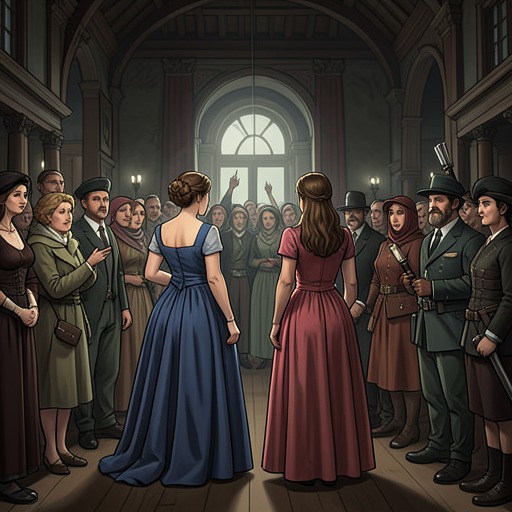
The church is identified as the place where a wedding ceremony was interrupted on Christmas Day, 1883. The account supplied here does not identify the participants or describe the interruption, but the specific date and the church’s ceremonial role establish it as more than a visual landmark: it is also a setting for a disruption of a wedding. Its combination of enduring religious architecture and interrupted ceremony gives the location a distinct narrative presence.